Financing Options for Hotel Wellness Equipment: A Guide
September 16, 2026 · 13 min read
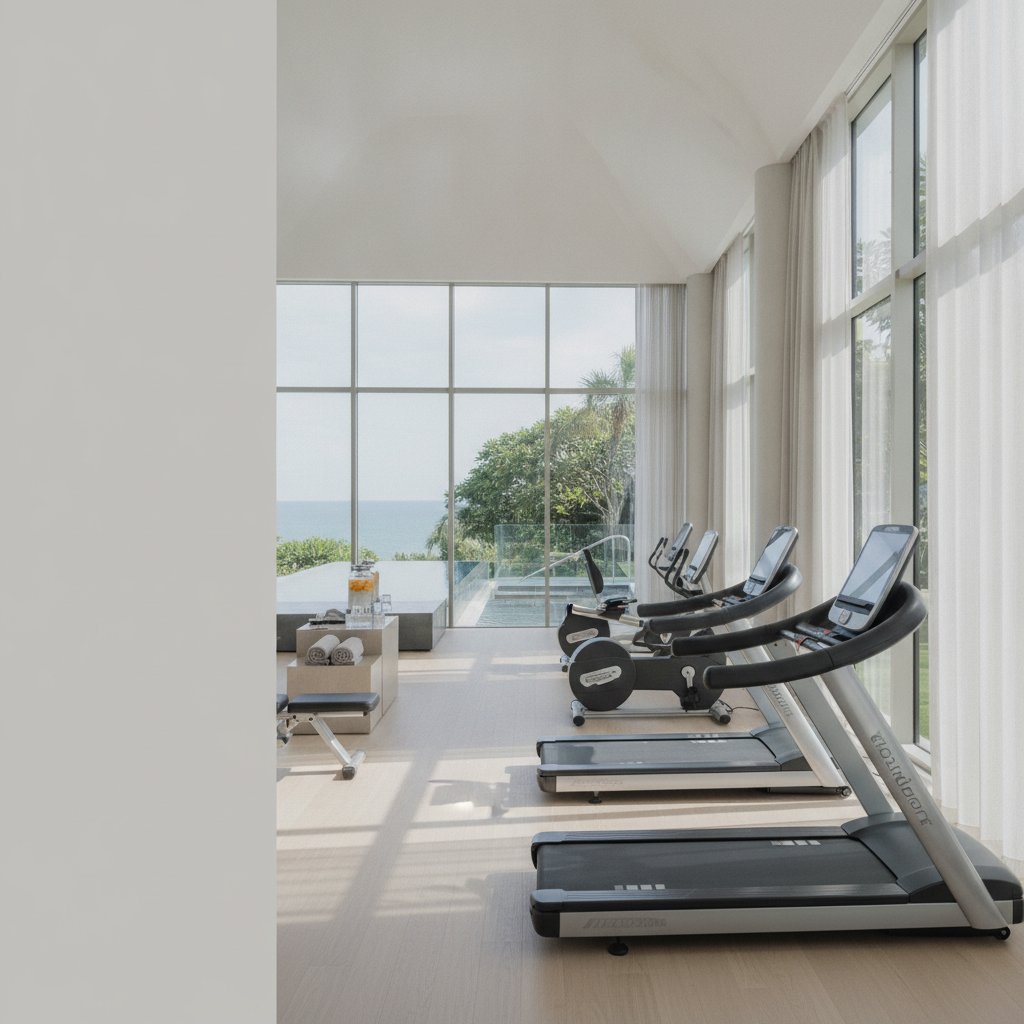
Adding a cold plunge suite, recovery lounge, or expanded fitness studio can transform a property's guest experience — but the capital outlay often stalls the project before it starts. Understanding the full range of financing options for hotel wellness equipment gives General Managers, Spa & Wellness Directors, and Owners a practical roadmap for funding these upgrades without draining reserves or delaying a high-demand amenity. This guide breaks down the loan structures, leasing programs, and vendor-financing paths that hotels are actually using in 2025 and 2026 to bring wellness equipment online faster.
TL;DR — The Bottom Line
Hotels fund wellness equipment through four main channels: equipment term loans, operating/finance leases, FF&E and project build-out loans, and vendor-facilitated or revenue-share financing. The right financing options for hotel wellness equipment depend on deal size, credit profile, and how quickly the property expects wellness revenue (ADR lift, spa spend, membership fees) to cover the payment. Because wellness-forward hotels report significantly higher TRevPAR and GOPPAR than non-wellness properties, many lenders and owners now treat wellness equipment as a revenue-generating asset rather than a pure cost center.
Quick Facts
- Typical equipment loan term: 36–84 months
- Typical APR range: 6.9%–24.9% depending on credit tier
- Down payment range: 0%–30% of equipment cost
- Funding speed: 1–7 business days after approval
- TRevPAR uplift for "minor wellness" hotels: 26%–53% year-over-year
- GOPPAR advantage for major wellness hotels vs. no-wellness hotels: up to 34% higher
Why Financing Hotel Wellness Equipment Is a Strategic Move Right Now
Wellness has moved from a nice-to-have amenity to a measurable profit center, and that shift is exactly why exploring financing options for hotel wellness equipment makes financial sense today. Recent hospitality performance data shows that hotels with wellness offerings materially outperform properties without them on total revenue per available room (TRevPAR) and gross operating profit per available room (GOPPAR) (Global Wellness Institute, 2025).
- Properties classified as "minor wellness" — generating under $1M or less than 10% of revenue from wellness — saw TRevPAR increases of 26% to 53% year-on-year in recent industry reporting (HotStats, 2025).
- "Major wellness" hotels, where wellness represents more than $1M or over 10% of revenue, reported 65% higher TRevPAR than minor wellness properties and 34% higher GOPPAR than hotels with no wellness component at all (HotStats, 2025).
- Across the broader market, wellness-forward hotels generated more than 2x the TRevPAR of hotels with no wellness income, alongside 4–6% GOPPAR growth and 2–3% ADR growth year-over-year (Global Wellness Institute, 2025).
For a GM or Owner preparing a capex request, these figures matter because they reframe the conversation. Instead of asking "can we afford this equipment," the more useful question becomes "which financing options for hotel wellness equipment let us capture this revenue uplift with the least strain on cash flow?" Lenders increasingly respond well to this framing, since predictable ancillary revenue (day passes, treatment upsells, membership fees) can be modeled directly against loan or lease payments.
What Are the Main Financing Options for Hotel Wellness Equipment?
There isn't a single "best" path — the right choice depends on deal size, credit history, ownership structure, and how fast the equipment is expected to pay for itself. Broadly, hotels use four categories of financing options for hotel wellness equipment:
- Equipment term loans — a lender purchases the equipment on the hotel's behalf; the property repays over a fixed term, typically aligned with the equipment's useful life.
- Operating and finance leases — the hotel pays regular installments to use the equipment without owning it outright, often with tax-deductible payments.
- FF&E and project/build-out loans — larger, often multi-category loans that bundle wellness equipment with broader renovation or fixture costs.
- Vendor-facilitated and revenue-share financing — programs arranged directly through equipment suppliers or spa consultants, sometimes tied to a percentage of wellness revenue rather than a fixed payment.
A: For a single unit or small package, an equipment term loan or a vendor-facilitated financing program is usually fastest — funding can occur in as little as 1 to 7 business days once approved, compared to weeks or months for a full FF&E project loan.
Equipment Financing and Leasing Structures Explained
This is the most common entry point for hotels adding discrete wellness assets — a cold plunge system, a set of reformers, a recovery station — rather than a full spa build-out.
Standard equipment term loans
A lender purchases the equipment directly, and the hotel repays the balance over a fixed schedule, usually 36 to 84 months, matched to how long the equipment is expected to remain in service (industry equipment finance data, 2025). APR ranges roughly from 6.9% to 24.9% depending on the hotel's credit tier, with down payments from 0% to 30%. Because approval and funding can move quickly — often 1 to 7 business days — this structure suits properties that want to launch a wellness amenity ahead of a specific season or event.
Operating and finance leases
Leasing is widely used for fitness and spa equipment because it preserves cash and offers flexibility to upgrade as technology changes. Lease terms commonly run 24 to 60 months, and payments may be fully deductible as an operating expense rather than a capital cost — a meaningful advantage for owners managing multiple properties under different tax structures (equipment finance industry sources, 2025). In some markets, wellness equipment leasing — including reformer and recovery equipment — is explicitly marketed to hotels as a way to add amenities "without upfront capital," with the leasing company retaining ownership while the hotel pays fixed installments.
FF&E and Project Loans for Larger Wellness Build-Outs
When a wellness upgrade extends beyond a single equipment category — say, a full recovery suite combining cold plunge, sauna, compression therapy, and fitness equipment — hotels typically turn to FF&E (furniture, fixtures & equipment) or broader project loans.
- Dedicated FF&E lenders specialize in financing the fixtures and equipment that go into hotel renovations, often bundling wellness equipment alongside furniture, lighting, and finishes into a single facility.
- Project or construction-adjacent loans are used when wellness equipment installation is tied to a broader renovation, such as converting underused square footage into a spa or recovery lounge.
- Bundled financing packages from suppliers or consultants can cover projects ranging from roughly $50,000 to $5 million or more, depending on scope, and are increasingly structured to finance an entire wellness program rather than piecemeal equipment purchases (spa consulting industry data, 2025).
This route requires more documentation — projected revenue models, contractor bids, and sometimes a brand-standard compliance review — but it allows owners to fund an entire wellness repositioning in one financing event rather than stitching together multiple smaller loans.
A: Yes. It's common for larger renovations to pair an FF&E loan for built-in fixtures with an equipment lease for specialized units like cold plunge systems, since the repayment terms and tax treatment can differ meaningfully between the two.
Vendor-Facilitated and Revenue-Share Financing Programs
A growing number of equipment suppliers and spa consultants now offer financing directly, rather than simply referring hotels to a bank. These programs typically fall into two categories:
Vendor-arranged loans and leases
The equipment supplier partners with a third-party lender to pre-qualify hotels for financing at the point of sale. This shortens the sales cycle and often results in equipment-specific terms (for example, warranty-aligned lease lengths) that a generic commercial bank wouldn't offer.
Revenue-share and performance-based structures
Rather than a fixed monthly payment, some arrangements tie repayment to a percentage of wellness revenue generated by the equipment — day-pass fees, membership upgrades, or in-room amenity charges. This structure is attractive for properties uncertain about early demand, since payments scale with actual usage rather than a flat obligation regardless of guest uptake.
For hotels evaluating financing options for hotel wellness equipment through a vendor, it's worth asking directly whether the company offers in-house financing, a lending partner network, or only equipment sales — the answer materially affects both speed and flexibility. HotelPlunge works with hospitality teams to evaluate equipment sourcing alongside financing pathways so GMs aren't left navigating lender relationships alone; you can learn more at HotelPlunge.
How to Choose the Right Financing Option for Your Property
Selecting among the available financing options for hotel wellness equipment comes down to matching structure to strategy. Use the following steps as a practical starting point.
- Define the scope precisely. A single cold plunge unit financed through an equipment loan looks very different from a full recovery suite requiring an FF&E project loan.
- Model expected wellness revenue. Estimate incremental ADR, day-pass income, or treatment upsells tied to the new equipment, and compare that to monthly loan or lease payments.
- Check credit tier and down payment capacity. Lower credit tiers typically face higher APRs (up to 24.9%) and larger down payment requirements (up to 30%).
- Compare tax treatment. Leases may offer immediate expense deductions, while loans build equity in an owned asset — consult your finance team on which fits current tax positioning.
- Evaluate funding speed against your timeline. If launch timing matters (peak season, renovation completion), prioritize equipment loans or vendor financing that can fund in days rather than weeks.
- Negotiate service and upgrade terms. For fast-evolving categories like recovery and cold therapy equipment, ask whether the financing structure allows for upgrades mid-term.
Comparing Financing Options: Rates, Terms & Best Fit
The table below summarizes how the main financing options for hotel wellness equipment differ in structure, typical cost, and ideal use case.
| Financing Option | Typical Term | Typical APR / Cost | Best Fit |
|---|---|---|---|
| Equipment term loan | 36–84 months | 6.9%–24.9% APR | Single or small package of equipment; hotel wants ownership |
| Operating/finance lease | 24–60 months | Fixed installment, often tax-deductible | Fast-evolving equipment categories; cash preservation priority |
| FF&E / project loan | Varies with project scope | Varies by lender and collateral | Full spa, gym, or recovery suite build-outs |
| Vendor-facilitated / revenue-share | Varies; often usage-linked | Percentage of wellness revenue or blended rate | New or uncertain-demand amenities; supplier-integrated purchases |
Note: Rates and terms vary by lender, credit profile, and market conditions; figures above reflect commonly reported ranges in hospitality equipment finance sources as of 2025 and should be confirmed directly with lenders.
Common Pitfalls When Financing Hotel Wellness Equipment
Even with strong revenue data supporting the investment, hotels sometimes structure financing poorly. Watch for these issues:
- Mismatched loan term and equipment lifespan. An 84-month loan on equipment with a 5-year functional life can leave a hotel paying for a depreciated or replaced asset.
- Ignoring revenue seasonality. Fixed monthly payments that don't account for off-season demand dips can strain cash flow; revenue-share structures may better fit seasonal properties.
- Underestimating installation and training costs. Financing the equipment itself is only part of the budget — staff training and space prep often need separate line items.
- Skipping a vendor financing comparison. Some hotels default to their existing bank relationship without comparing vendor-facilitated rates, which can be more competitive for specialized equipment categories.
A: It depends on the hotel's liquidity position and tax strategy. Cash purchase avoids interest costs entirely, but leasing or financing preserves capital for other priorities and can offer tax-deductible payments — many hotels choose financing specifically to keep cash available for operations while still capturing wellness revenue quickly.
Frequently Asked Questions
What financing options for hotel wellness equipment are available to independent hotels without a large balance sheet?
Independent hotels typically rely on equipment term loans, operating leases, and vendor-facilitated financing programs, since these structures often base approval on the equipment's value and projected revenue rather than solely on the hotel's overall balance sheet strength.
How long does it take to get approved for hotel wellness equipment financing?
Approval timelines vary by structure: equipment loans and vendor financing can often be approved and funded within 1 to 7 business days, while FF&E or larger project loans tied to renovation work may take several weeks due to additional documentation requirements.
Can wellness equipment financing payments be covered by the revenue it generates?
In many cases, yes. Hotels with wellness offerings report significantly higher TRevPAR and GOPPAR than properties without them, and revenue-share or vendor-facilitated financing structures are specifically designed to align payments with actual wellness income rather than a fixed obligation.
What's the difference between leasing and an equipment loan for hotel wellness equipment?
An equipment loan results in the hotel owning the asset once repaid, while a lease means the hotel pays for the use of the equipment without ownership, often with lower upfront costs and tax-deductible payments, but without building equity in the asset itself.
Do equipment suppliers offer their own financing for hotel wellness equipment?
Yes, many suppliers now partner with third-party lenders to offer vendor-facilitated financing at the point of sale, which can speed up approval and sometimes provide equipment-specific terms not available through a general commercial lender.
Conclusion: Turning Wellness Ambition Into a Funded Project
The data is clear: wellness amenities are no longer a discretionary add-on but a measurable driver of TRevPAR, ADR, and GOPPAR. The remaining question for most GMs, Spa Directors, and Owners isn't whether to invest in wellness equipment — it's which financing options for hotel wellness equipment best match their property's scope, timeline, and credit profile. Whether that means a straightforward equipment lease for a single cold plunge unit, an FF&E loan for a full recovery suite, or a vendor-facilitated program tied to usage, the right structure can turn a stalled capex request into a revenue-generating amenity within weeks rather than years.
If you're evaluating financing options for hotel wellness equipment and want guidance on sourcing, vetting, and funding cold plunge and recovery installations, HotelPlunge can help you compare paths and connect with the right partners for your property's timeline and budget.